

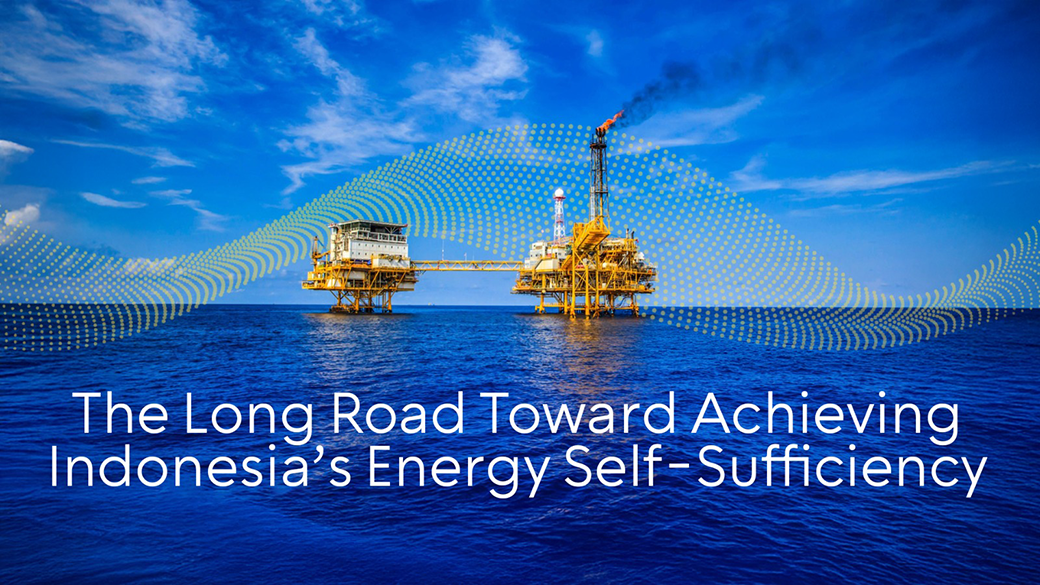
TANGERANG, December 17, 2025 - Efforts to achieve Indonesia’s energy self-sufficiency represent a long journey that requires policy consistency, a clear and firm national development direction, and a long-term commitment to managing the country’s upstream oil and gas sector. In an interview, Komaidi Notonegoro, Executive Director of the ReforMiner Institute, emphasized that the role of oil and gas cannot simply be sidelined in supporting Indonesia’s development. “Oil and gas continue to play a central role in maintaining economic sustainability and industrial activity in Indonesia,” he said. Beyond serving as an energy source, oil and gas are also critical production factors or commodities for industries such as petrochemicals, fertilizers, pharmaceuticals, and public mobility. Given that Indonesia’s current energy structure still relies heavily on fossil fuels, strengthening the upstream oil and gas sector is not an option but a strategic necessity.
According to the Handbook of Energy & Economic Statistics of Indonesia 2023, Indonesia’s primary energy supply is still dominated by fossil energy, namely coal, crude oil, and natural gas. This fact further underscores the urgency of reinforcing the upstream oil and gas sector. Without an increase in domestic oil and gas production, achieving national energy security will be extremely difficult, especially as energy demand continues to rise alongside economic growth and the expansion of other industrial sectors.
Tragically, national oil and gas production has not kept pace with the growing energy demand. As a result, Indonesia’s dependence on energy imports has increased in recent years. “Consumption is rising, production is declining. This means our dependence on imports is growing,” Komaidi said. This dependence not only affects the trade balance, but also has broader implications for price stability, energy security, and Indonesia’s ability to withstand global geopolitical fluctuations.
It is important to remember that the upstream oil and gas industry is characterized by long lead times, from exploration to production. “If oil is discovered today, production will only begin four to five years later. That is why this sector truly requires certainty,” Komaidi explained. With such long cycles, he added, any form of uncertainty, whether related to licensing, fiscal terms, or governance, will directly affect investor interest. This is why government commitment becomes a decisive factor in determining whether investors are willing to commit their capital.
In his discussion, Komaidi also highlighted the importance of proportional fiscal incentives. Under production sharing contract (PSC) schemes, the financial risks incurred during exploration are borne by contractors, not the state. Therefore, he argued, incentives should not be viewed as a “loss of revenue,” but rather as a catalyst for increasing national oil and gas production, which in turn can generate multiplier effects for the economic growth targeted by the government. “There is no point in receiving a large share if the economy does not grow. It is better to receive a reasonable share while oil and gas production continues to increase,” he explained. This statement illustrates the importance of balancing state interests with project economics.
It is known that Indonesia still has many basins believed to contain significant oil and gas potential. However, deepwater areas, eastern Indonesia, and frontier regions with minimal infrastructure host the majority of these basins. As a result, this substantial potential will never be converted into proven reserves capable of supporting energy needs unless exploration activities are carried out. Komaidi emphasized the need to strengthen current "sporadic" exploration activities. The development of new projects, he said, requires comprehensive policies that support high-risk ventures, advanced technology, and incentives aligned with the characteristics of each region.
At the same time, he continued, various downstream issues—such as fuel shortages, limited LPG supply, or challenges in supplying natural gas to the industrial sector—are in fact symptoms of problems originating in the upstream sector. Therefore, a comprehensive approach is needed: strengthening the upstream sector as a foundation so that downstream operations can run smoothly. “The indicators are clear: production is declining, reserves are declining. Yet what is often discussed are only downstream issues,” Komaidi said.
Regarding the current direction of government policy, Komaidi observed positive signals, including improved inter-ministerial coordination and greater attention to the technical details of the oil and gas industry. However, he cautioned that the results of upstream policy measures cannot be seen within just one or two years. “The signals are there, but the results will only be visible several years from now. This means the government must remain consistent in implementing its policies,” he said.
Ultimately, the journey toward Indonesia’s energy self-sufficiency requires a balance between political courage and economic calculation. Strengthening exploration, ensuring regulatory certainty, maintaining fiscal readiness, and harmonizing policies must move forward in tandem. The success of today’s upstream oil and gas sector will determine Indonesia’s future energy stability and will be the result of long-term commitment and close collaboration between the government and industry players. (*)