
TANGERANG—The 50th IPA Convention and Exhibition (IPA Convex 2026) marks half a century of the Indonesian Petroleum Association overseeing the oil and gas industry in the country. For more than five decades, this strategic sector has proven its role as a driver of state revenue and a pillar of national industrial momentum.
On the other hand, historical records show that Indonesia has been a net oil importer since 2003. To meet the domestic needs that continue to grow during this energy transition, Indonesia still imports approximately 1 million barrels of oil per day to maintain national energy security.
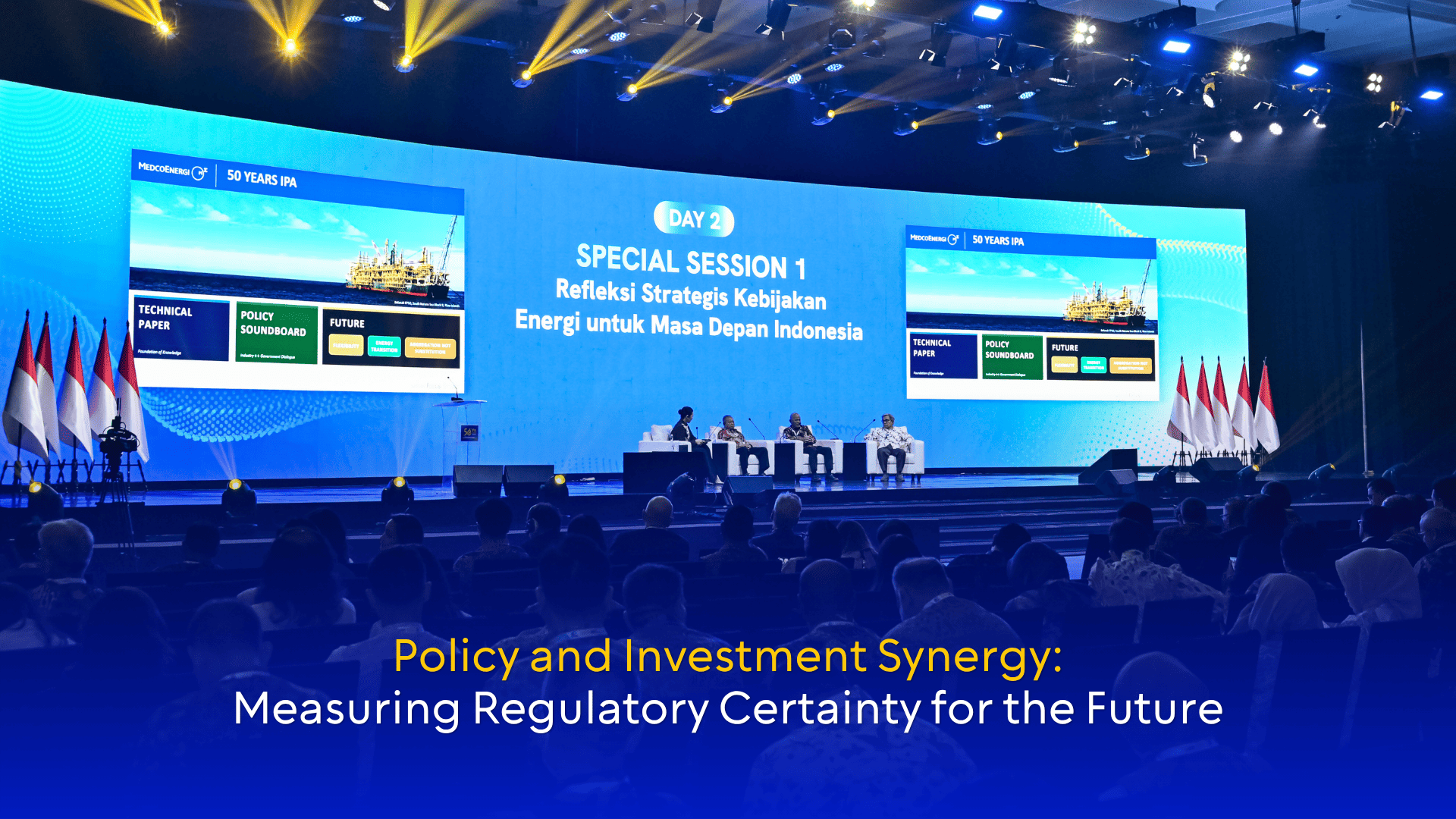
This reality brought a sense of urgency to the Special Plenary Session titled "Strategic Reflections on Energy Policy for Indonesia's Future." Opening the discussion, Purnomo Yusgiantoro, currently serving as Energy Advisor to the President of Indonesia, offered a new perspective on viewing the national energy roadmap.
According to the former Minister of Energy and Mineral Resources (ESDM), Indonesia cannot simply rush into the global energy transition; it must go through a measured and gradual energy transformation process.
"Our ultimate goal is indeed decarbonization to reach the net zero emission target. However, the stages must be realistic, moving from decarbonization to decentralization and finally to digitalization," he said. "Interestingly, in Indonesia, these three processes do not have to be followed rigidly in order; they can be worked on in parallel," Purnomo added before industry players.
In his presentation, Purnomo emphasized the pragmatic reality faced by developing countries: "We still need oil and gas." Oil and gas are considered anchors of stability, where natural gas plays a vital role as a primary transition asset to support the development of new and renewable energy.
Referring to the national regulatory hierarchy, he formulated three main pillars that represent a collective homework assignment: maintaining availability (Availability), the readiness of pipeline infrastructure and transportation modes (Transmission), and distribution efficiency (Distribution).
However, Indonesia's current challenge is no longer just finding new reserves but how to win the competition for global capital. Amidst a financial capital market that is increasingly selective in choosing sustainable projects, the competitiveness of Indonesia's investment climate came under sharp scrutiny from the panelists.
Kardaya Warnika, Chairman of BPMIGAS from 2005–2008, reminded attendees that the main driver of massive upstream exploration activity is the investor, not the government. Therefore, understanding market psychology is a key factor for policymakers.
"We must look at what investors want, what they do not, and what they do," said Kardaya. He corrected the mistaken view that this approach seems too favorable to the private sector. According to him, understanding investors is a logical step because they move based on careful calculations: from subsurface geological potential and project economics to the total fiscal revenue-sharing that will eventually flow back into the state treasury.
Furthermore, Kardaya pointed out legal certainty as the main attraction for high-risk projects such as deep-water exploration. In his view, the ongoing discourse on amending the Oil and Gas Law should ideally reach a solid final point soon. Stable regulatory certainty is seen as a key factor that can slow the decline in production and attract major oil companies back to Indonesia's frontier blocks.
Closing the discussion on the future of energy, Hilmi Panigoro, President Director of MedcoEnergi, emphasized that the challenge of national energy security is too large to be shouldered by one party alone. The IPA represents the industrial community and is committed to continuing to play an active role as a "Policy Sound Board" for the government.
Through concrete contributions in the form of technical papers and market-based comparative studies, industry players hope to assist the government in formulating adaptive policies. This synergy is expected to create a harmonious meeting point: fulfilling national energy targets while maintaining a fair and competitive rate of return for long-term investment sustainability.
Indonesia's resource potential remains very promising. The path forward now depends on how agile all stakeholders are in aligning their vision for transformation, accelerating regulatory certainty, and strengthening collaboration for an independent energy future. (*)