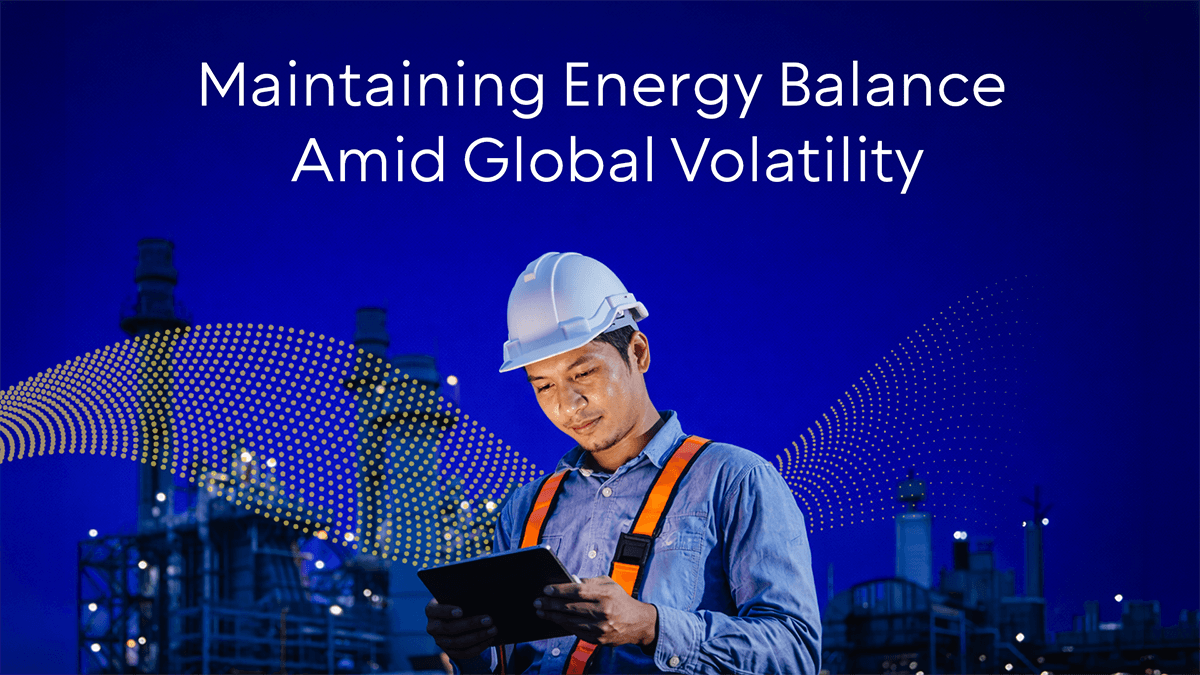
Recent fluctuations in global energy prices have once again underscored a fundamental truth: energy security is a foundation that cannot be overlooked. For Indonesia and several countries in Southeast Asia, this dynamic highlights how external pressures significantly impact the stability of energy supply and pricing. Evan Lukas, Vice Chairman of the Organizing Committee of the 50th IPA Convention and Exhibition 2026 (“IPA Convex 2026”), observes that current global geopolitical tensions directly influence Indonesia’s energy landscape—both in terms of risks and opportunities.
“Global tensions are driving volatility in energy markets, from supply disruptions to price fluctuations. For Indonesia, which still relies on imported crude oil and fuel, this situation places pressure on energy costs, subsidies, and the trade balance. At the same time, however, it also presents an opportunity. As countries seek more secure and diversified energy sources, Indonesia’s relatively stable geopolitical position, combined with its untapped basins, can attract new investments,” he explained.
He added that this momentum must be addressed strategically. Enhancing fiscal competitiveness and accelerating field development projects are key to capitalizing on these opportunities. With these measures, Indonesia is believed to have the potential to turn its trade deficit into increased state revenue and stronger economic growth.
Growing energy demand is not always matched by adequate domestic production capacity. Dependence on imports, coupled with global price fluctuations, reinforces the urgency of building a more resilient energy system. In this context, energy security should not be viewed merely as the ability to respond to crises, but as the capacity to systematically manage risks while sustaining economic growth.
Several rapid-response policies, including the reimplementation of Work From Home (WFH) in certain government sectors, reflect efforts to manage energy consumption amid global price pressures. However, these measures are largely tactical and demand-side focused. While consumption efficiency remains important, without strengthening the supply side, such approaches tend to only provide short-term relief without addressing the more fundamental issues.
In this context, Indonesia holds a relatively strategic position. Domestic stability and significant untapped resource potential open opportunities for the country to play a more active role in strengthening energy security, not only at the national level but also regionally. This role becomes increasingly relevant as the ASEAN region seeks more reliable and competitive energy supply sources.
From a long-term perspective, Evan emphasizes that the strategic role of the upstream oil and gas sector must continue to be strengthened, not only as a source of production but as a pillar supporting energy security, economic resilience, and a sustainable transition. This is what he refers to as the “and equation” approach.
“Strengthening the upstream sector is not a choice between energy security and energy transition, nor between growth or sustainability—it is about achieving both simultaneously. Increasing domestic production reduces exposure to global volatility while also creating investment opportunities, generating jobs, and strengthening the domestic supply chain,” he stated.
With this role, the upstream sector becomes not only a short-term buffer but also a foundation for long-term energy security and economic transformation. Ultimately, energy security requires a consistent balance between managing consumption and strengthening supply. Policies that focus on only one side will not be sufficient to address the complexity of global dynamics. Through a more integrated approach, Indonesia can not only strengthen its national energy sovereignty but also contribute to a more resilient regional energy system.
Amid these dynamics, the relevance of industry forums such as IPA Convex 2026 becomes increasingly evident. Amid complexities that cannot be addressed by a single stakeholder, there is a need for a platform that brings together industry players, regulators, and investors in an honest and solution-oriented dialogue. IPA Convex 2026 serves as a consolidation platform where industry voices can be collectively articulated, commitments reinforced, and concrete steps agreed upon. Ultimately, energy security is not only about policy or production, it is built on the ability of the entire ecosystem to move in alignment, at the right time.